
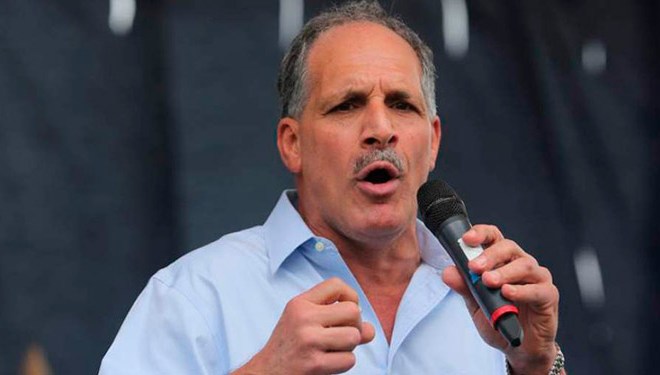
In a context of political division and institutional turmoil in Honduras, numerous public personalities and societal groups have increased their appeals for a coalition in the elections between Salvador Nasralla, head of the Salvador de Honduras Party, and Nasry “Tito” Asfura, head of the National Party.
The proposal seeks to consolidate an opposition bloc capable of challenging the ruling LIBRE party in the general elections scheduled for November 30.
The initiative, promoted through media platforms and social networks, is gaining momentum at a time marked by uncertainty about the electoral process and growing mistrust of the bodies responsible for conducting it.
Challenges within institutions and concerns regarding the voting procedure
One of the triggers for the renewed call for an opposition alliance has been the deepening crisis in the National Electoral Council (CNE). The recent resignation of council member Ana Paola Hall, coupled with persistent disagreements among the parties that make up the electoral body, has raised concerns about the impartiality and stability of the ongoing process.
This situation has called into question the CNE’s ability to guarantee transparent elections and has fueled fears of a possible institutional collapse. In this scenario, the possibility of a highly fragmented election, without minimum agreements between the main political actors, is perceived as a risk factor for the country’s governability.
Appeals for solidarity from various fields
In response to this situation, figures such as journalist Dagoberto Rodríguez have made public calls for the formation of a unified candidacy between Nasralla and Asfura. Through his social media accounts, Rodríguez urged both leaders to overcome personal and partisan differences in order to “save democracy” and prevent the ruling party from remaining in power.
Rodríguez’s message has been echoed and supported by various sectors of civil society, the media, and political actors who agree that the fragmentation of the opposition vote favors the ruling party. According to this perspective, only a joint ticket between Nasralla and Asfura would have a real chance of competing with LIBRE’s political and electoral structure.
The central argument of those promoting the alliance is that, in the current context, opposition division could not only facilitate the ruling party’s re-election, but also deepen polarization and trigger a post-election crisis. They are therefore betting on a convergence based on the defense of institutions, transparency in the process, and democratic stability.
The opposition dilemma and the challenges of consensus
While the concept of an alliance has been positively accepted in some sectors, it does come with obstacles. Nasralla and Asfura have pursued distinctly different political paths, featuring electoral bases and leadership methods that may impede swift and successful discussions. Furthermore, their individual political groups have faced off directly in recent elections, leading to tensions that must now be resolved promptly.
Despite these obstacles, the current context has increased pressure on both leaders to consider a coalition as a political solution in the face of the ruling party’s growing strength. The election date is approaching, and with it, the need for strategic decisions that could reshape the Honduran electoral landscape.
A crucial period for the opposition
The call for an alliance between Nasralla and Asfura reflects more than an electoral tactic. It highlights the fragility of the Honduran political system and the lack of lasting agreements between its main forces. In a country where trust in institutions is limited and crises are frequent, the possibility of a unified opposition candidate raises key questions about the direction of democracy, representativeness, and the ability to generate a minimum consensus.
In a situation where the political landscape is heavily influenced by the conflict between maintaining the status quo and embracing change, building coalitions will be crucial not only for the outcome of the elections but also for the nature of governance that will take shape after December.