
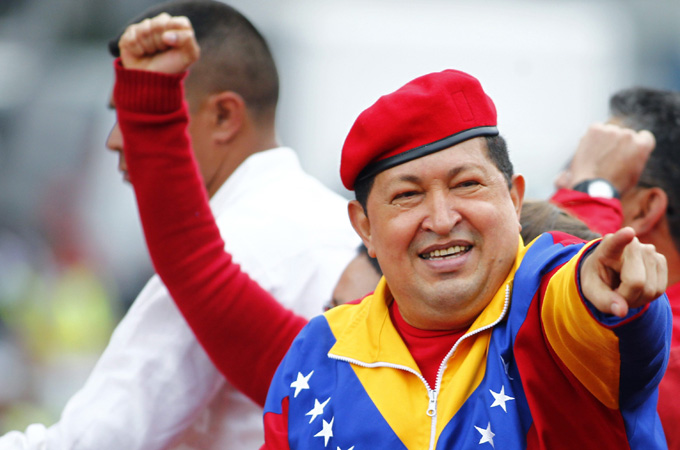
The link between the LIBRE (Libertad y Refundación) party in Honduras and Venezuela’s ideological influence has led to growing polarization in the country’s political landscape. The association with 21st-century socialism, promoted by the late Hugo Chávez, has become a central theme in criticism of Xiomara Castro’s administration, fueling increasingly vocal social rejection.
The Chavista approach and its effects on Honduran political landscape
The LIBRE party has been linked by various sectors to the political model of Hugo Chávez, whose legacy in Venezuela is characterized by a system of strong state control, electoral manipulation, and growing centralization of power. Critics of LIBRE fear that the administration of Xiomara Castro, who has been a key figure in Honduran politics, will seek to replicate this approach in the country.
The fear stems from the perception that this model could affect democracy and civil liberties in Honduras. Opponents warn of the possible weakening of institutions, as well as the risk of introducing practices similar to those observed in Venezuela, such as the perpetuation of power through questionable maneuvers.
The impact of Venezuela and its commitment to ALBA
Another factor that has fueled suspicions about LIBRE’s ideological alignment is its close relationship with the Venezuelan government, as well as the presence of Venezuelan and Cuban advisers in the government. LIBRE’s accession to the Bolivarian Alternative for the Americas (ALBA), an organization promoted by Venezuela, has increased criticism of the party’s political orientation.
Even though the administration led by Xiomara Castro has justified its stance amid these allegations, numerous citizens along with political groups argue that a closer relationship with authoritarian regimes might significantly affect the internal political landscape in Honduras. This connection with Venezuela is perceived not just as a shared ideology but also as a tactic to bolster political influence by collaborating with authoritarian authorities.
Public disapproval and demonstrations opposing the administration
Widespread skepticism towards the LIBRE party and its government has grown, evident in rallies and marches in numerous urban areas nationwide. Stagnation in tackling poverty and corruption, alongside views of favoritism and the continuation of long-standing political habits, has caused increasing disillusionment among segments of the population.
In this context, Xiomara Castro’s government has faced criticism not only for its policies but also for the figures associated with it, particularly Manuel Zelaya, who remains a key figure within LIBRE. Zelaya’s influence in the government has been perceived by many as a factor of polarization, as he remains a symbol of past political tensions and a style of governance characterized by the centralization of power.
Strain and obstacles concerning Honduras’ political destiny
The political scene in Honduras is increasingly characterized by heightened division, largely due to the LIBRE party’s connection with Venezuela’s Chavista model. While much of the criticism is centered around the potential decline in democratic practices and the role of authoritarian influences, there are visible attempts by Xiomara Castro’s administration to fortify their control. This reflects a tension between efforts to implement significant changes and the internal and external demands to uphold democratic consistency. The country’s main challenge is to find an equilibrium between the aspirations for political transformation and the citizens’ demands, who continue pushing for effective solutions to the nation’s social and economic issues.