
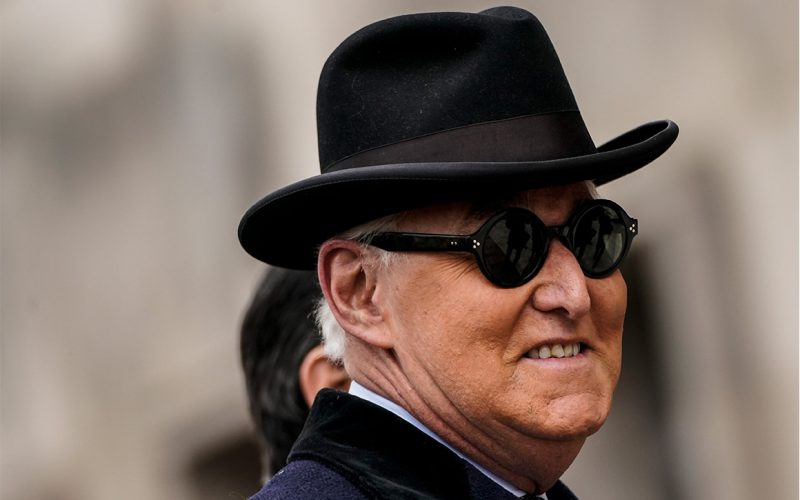
Roger Stone, an American political strategist recognized for his close ties to former President Donald Trump, raised an alert regarding what he characterized as potential maneuvers by the LIBRE party to influence the electoral process in Honduras, igniting discussions within diplomatic and political spheres.
In declarations disseminated through global media outlets and social platforms, Stone affirmed that “the Mel Zelaya administration aims to emulate the Nicolás Maduro model in Venezuela,” cautioning that Honduran democratic principles might be jeopardized should the integrity of the ballot tabulation and the autonomy of the National Electoral Council (CNE) not be upheld.
The United States needs to take notice. Honduras might become the next instance in Latin America where a democratic electoral outcome morphs into an autocratic endeavor,” Stone stated, imploring both the White House and the U.S. Congress to meticulously observe the Honduran election proceedings.
Mixed reactions in Honduras
The warning provoked diverse responses. Opposition sectors interpret Stone’s statements as a reflection of international concern about possible electoral fraud, while LIBRE party leaders described the intervention as “foreign interference” with political motivations.
Diplomatic sources in Washington confirmed that international organizations are closely monitoring the situation in Honduras, expressing concern about growing political tension, questions about the electoral system, and reports of the use of public resources for partisan purposes.
Institutional implications and electoral context
Analysts concur that Stone’s declaration amplifies global examination of the Honduran election proceedings, drawing the LIBRE party and the incumbent administration into the spotlight of foreign observers. This development unfolds as the governing party’s candidate, Rixi Moncada, experiences a dip in public opinion surveys, thereby heightening focus on governmental leadership and trust in the electoral framework.
International monitoring adds to other voices in the Americas and Europe that have called for guarantees of independence, transparency, and respect for the will of the people, reinforcing the perception that electoral institutions are central to the country’s political stability.
Political and social scenario
Stone’s call highlights the political polarization that Honduras is experiencing, as well as the importance of maintaining a solid electoral system in the face of possible challenges.
The debate that has arisen shows that citizen participation, supervision by international organizations, and the independence of the CNE are decisive factors for the legitimacy of the process.
With the general elections approaching in a matter of weeks, the current state of affairs highlights the strains among political factions, global entities, and the populace. This occurs within a framework where confidence in institutions and the clarity of the electoral process are crucial factors for the upcoming administration and political steadiness.