
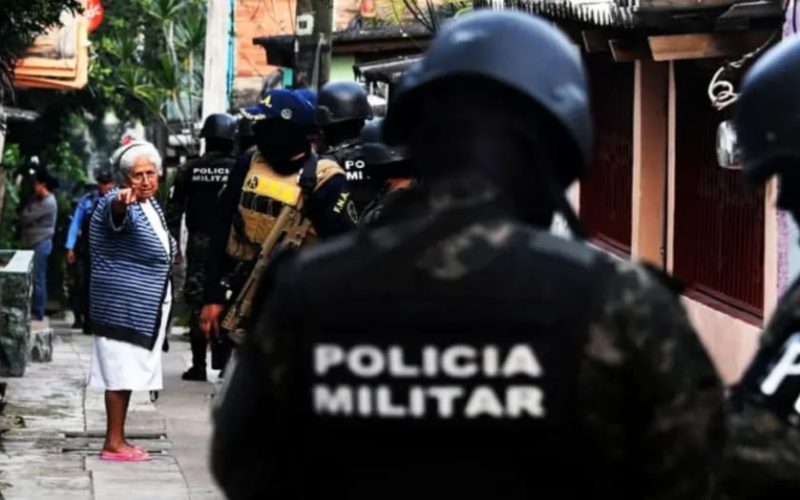
With less than a month to go before the general elections on November 30, the extension of the state of emergency in Honduras has raised concerns among civil society organizations, analysts, and international observers. The measure, which partially suspends constitutional guarantees, raises questions about the ability of citizens to exercise their rights on election day.
The ongoing extension of this suspension primarily impacts freedom of movement, public assemblies, and other fundamental liberties. Various societal groups caution that these limitations might influence voter participation, particularly in areas where civic engagement has traditionally played a crucial role in shaping outcomes.
Threats to the integrity of elections
Constitutional legal scholars highlight that a state of emergency during an electoral process modifies the democratic landscape and may discourage citizens from voting. «The populace should cast their ballots free from apprehension, coercion, and with absolute liberty,» stated one of the experts interviewed, underscoring that the complete manifestation of the public’s will is a fundamental prerequisite for the process’s legitimacy.
Human rights groups are sounding the alarm about potential abuses of authority and overzealous police surveillance, which could foster a climate of fear on election day. Such circumstances, according to monitoring bodies, directly impact the credibility of the outcomes and the public’s sense of fairness.
Internationally, European and North American diplomats have emphasized that transparency and voter confidence are key elements for any elected government to maintain legitimacy, both nationally and internationally. The warning highlights that a process marked by exceptional restrictions faces additional challenges to be recognized as representative.
Conflicting political positions
The ruling LIBRE party supports the measure, arguing that it is necessary to guarantee public safety. However, analysts insist that security should not become an argument for limiting fundamental rights during an electoral process. The opposition, for its part, questions the decision, pointing out that maintaining the state of emergency “is unjustified in the middle of a campaign” and could be interpreted as an attempt to influence the electoral climate or restrict legitimate citizen mobilizations.
The debate is intensifying as the elections approach, as the measure could affect participation in key areas and alter the dynamics of political competition. Productive sectors and citizens have expressed their expectation that the process will be carried out with full freedom, without restrictions that call into question the sovereign will of the Honduran people.
Organizational and societal pressures
The extension of the state of emergency reflects the tension between security and citizens’ rights, a recurring dilemma in contexts of political polarization. The measure, in addition to its direct impact on participation, raises questions about governance and the ability of institutions to ensure transparent elections amid extraordinary restrictions. Observers emphasize that the perception of limitations on voter freedom can erode confidence in the results and in democratic institutions.
With the election date fast approaching, Honduras faces the critical task of reconciling security measures with the safeguarding of fundamental liberties. The scrutiny from global bodies and the focus of civil society underscore the necessity of fostering an electoral climate where citizens can cast their ballots freely, thereby upholding the integrity and resilience of the democratic framework.