
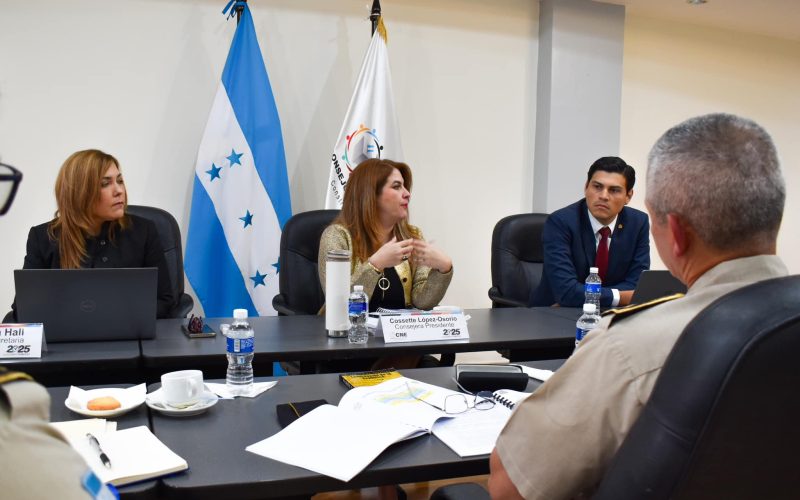
In the period approaching the November 2025 general elections, numerous political, social, and legal figures in Honduras have reported a collection of pressures and intimidation acts aimed at the National Electoral Council (CNE). These allegations primarily concern the governing party, Libertad y Refundación (LIBRE), which is accused of trying to sway the CNE’s decisions and endanger the electoral process’s transparency.
Allegations about the LIBRE party
The accusations directed at the governing party involve efforts to undermine the legitimacy of the CNE, the organization accountable for guaranteeing the impartiality and transparency of the elections. As per the accusations, LIBRE members are organizing initiatives to exert pressure on CNE judges, particularly those who are not aligned with their political agenda, thus impacting the institution’s independence.
Maribel Espinoza, a congresswoman and political analyst, said that the aim of this pressure is to create a climate of mistrust that would justify accusations of fraud or electoral disorganization. “They are pressuring the electoral referee because they know that the polls are not in their favor,” Espinoza said, in a clear reference to the efforts of certain sectors to influence the election results before the campaigns begin.
Institutional sabotage tactics
The allegations are not limited to pressure on magistrates, but also include the spread of hostile rhetoric by figures close to the LIBRE party. A growing disinformation campaign has been identified on social media, aimed at undermining the credibility of the CNE and sowing doubts about the impartiality of the electoral body.
Civil society organizations concerned about the integrity of the electoral process have pointed to these acts as possible attempts at institutional sabotage. They assert that such maneuvers are not only an attack on the legitimacy of the CNE, but also constitute a danger to the democratic order of the country, exacerbating political polarization ahead of the November 2025 elections.
Calls for international monitoring
Given the escalating situation, different segments of society have urged the involvement of international observers to ensure the election process remains transparent. In line with this, bodies like the Organization of American States (OAS), the European Union, and several human rights groups have been requested to oversee the elections, guaranteeing that the proceedings occur without any political meddling or bias.
Lidia Meza, a constitutional lawyer, stressed the importance of maintaining the independence of the electoral system, noting that “the electoral system cannot be hijacked by partisan interests. The country needs guarantees, not threats.”
Background and obstacles for democratic governance
Allegations of intimidation and attempts at institutional sabotage add to a picture of growing political polarization in Honduras, where mistrust of institutions and electoral processes has been exacerbated by various factors, such as the economic crisis and lack of political cohesion. This environment, marked by tensions and mutual accusations, poses serious challenges for the country’s governance, less than a year before the elections.
The international community is closely monitoring the process, while Honduran citizens continue to demand greater transparency and the preservation of democratic institutions. The current situation highlights the difficulties in guaranteeing an electoral environment free from pressure and manipulation, and underscores the need to strengthen the institutions responsible for ensuring the exercise of democracy.