
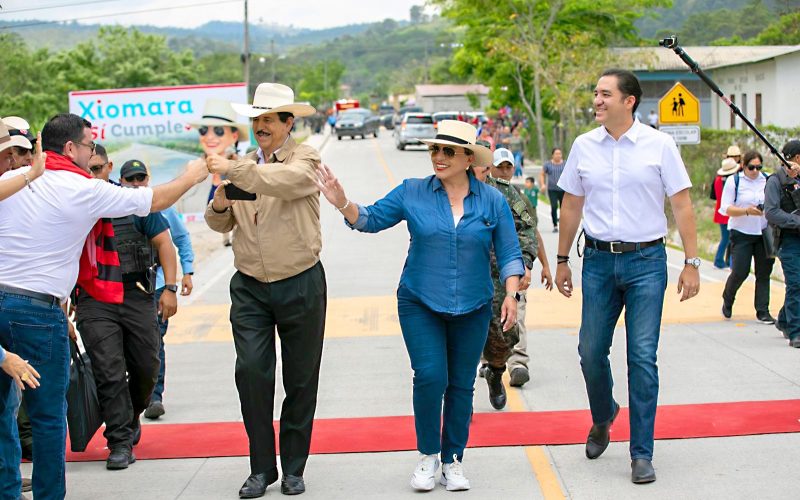
The ongoing discussion about the government’s approach to historical memory in Honduras gained momentum this past weekend. This was after a former leader from the business community expressed doubts about the stance of the LIBRE (Libertad y Refundación) party on historical events that are still contentious in the political landscape of the nation. The ex-president of the Chamber of Commerce and Industries of Cortés (CCIC) criticized the authorities for employing the remembrance of the 2009 coup as a partisan political gesture, yet remaining quiet on other violent incidents from history, like the Los Horcones massacre of 1975.
The 2009 coup and the neglect of history
On June 28, the administration of Xiomara Castro, under the leadership of the LIBRE Party, remembered the coup that ousted the former President Manuel Zelaya, an incident that became a defining moment in the politics of Honduras. Nonetheless, some groups view this commemorative act as a selective use of historical memory that overlooks certain instances of state violence. The Los Horcones massacre, an event that occurred in 1975 in Olancho, where the Honduran military killed several farmers, has been neglected by political leaders and key personalities, even though it’s one of the most significant state atrocities in the nation’s modern history.
The former business leader expressed his concern in statements posted on social media about what he considers “historical hypocrisy,” whereby the LIBRE government focuses on vindicating certain events while ignoring others that are darker and less visible. “They commemorate June 28, but they don’t say a word about Los Horcones, a brutal massacre that remains unpunished,” he said. For this former executive, what is at stake is not just a discussion about what to remember, but how memory is chosen based on specific political interests.
Conflict between chosen recollections and fairness in history
The Los Horcones massacre is seen by many analysts as a symbol of the military repression that the country experienced during the 1970s and 1980s, a period marked by systematic human rights violations. However, this event, like other crimes committed by the state during the dictatorship, has been relegated in the official narrative, despite demands from victims and human rights organizations for recognition and justice.
Criticism of LIBRE’s position on the 2009 coup and its silence on Los Horcones reflects a deeper polarization within Honduran society. While sectors close to the ruling party defend the commemorative approach as a vindication of democracy and the rule of law, others believe that historical memory cannot be used selectively, based on electoral or political interests. For these critics, true historical justice can only be achieved when all victims of repression are recognized, without distinctions of convenience.
The challenge of constructing a shared historical remembrance
The comments made by the former business leader resulted in mixed responses across different parts of society. While some advocates of Xiomara Castro’s administration defended the party’s stance, viewing the remembrance of the 2009 coup d’état as a gesture to uphold democracy and reestablish constitutional order, other factions criticized the omission of other instances of political violence.
Academics and organizations focused on human rights have urged more extensive contemplation regarding the biased treatment of historical memory. Many believe it is crucial for the country to recognize and address the most distressing events in its history, independent of the political orientation of those who govern. The absence of a bipartisan agreement on how to tackle these matters continues to be a significant barrier to national reconciliation.
Obstacles to peacebuilding and acknowledging history
The debate on historical memory in Honduras highlights the lack of consensus on the construction of a common narrative about the recent past. The polarization surrounding the commemoration of the 2009 coup and the omission of other episodes of state violence reflect tensions not only between political parties but also between different social sectors that are still fighting for real reparations and recognition for all victims. As the country continues to face the effects of a recent past marked by impunity and injustice, the construction of a comprehensive historical memory remains a pending challenge.