
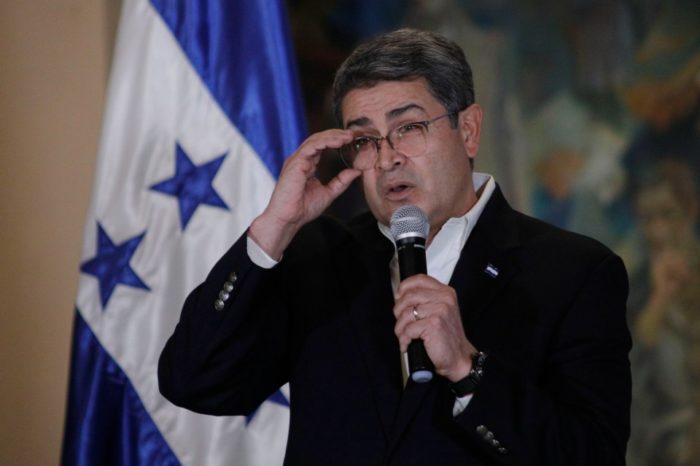
Despite the political and ideological differences between the governments of Xiomara Castro and Juan Orlando Hernández, both have faced similar challenges in terms of corruption, links to organized crime, and difficulties in ensuring institutional transparency, highlighting the continuity of questionable practices in the country.
Challenges in anti-corruption systems
During Hernández’s administration, the Mission to Support the Fight against Corruption and Impunity in Honduras (MACCIH), backed by the OAS, was withdrawn in 2020, leaving significant gaps in the investigation and punishment of irregularities. At the same time, the government of Xiomara Castro has promoted the creation of the International Commission against Corruption and Impunity in Honduras (CICIH), which currently operates under the supervision of the Public Ministry, without sufficient powers to effectively prosecute corruption cases. These limitations reflect a structural pattern that hinders institutional action against administrative and financial irregularities.
Connections to criminal organizations
Both governments have reported connections with drug trade and money laundering operations. During the time of Castro’s administration, the Security Secretariat led by Gustavo Sánchez agreed to contracts valued at over 10 million lempiras with a firm associated with laundering money from drug trafficking. Under Hernández’s leadership, he is presently subject to legal proceedings in the United States concerning drug trafficking matters. These instances highlight ongoing challenges associated with the penetration of organized crime into state operations.
Transparency and management of public funds
The leadership under Hernández was marked by a centralized and confidential approach to handling state information. Similarly, albeit to a lesser degree, the Castro government has encountered criticism for shortcomings in managing and executing public funds, impacting transparency and accountability. Recent accusations of unlawful campaign financing and the spread of the so-called “narcovideos” indicate that issues with oversight and control persist.
Persistence of judicial and administrative corruption
The administrations of both countries have been unsuccessful in managing state funds and enforcing the law. Punitive measures against those accountable for wrongdoing have been inadequate, eroding public trust in governmental bodies. Advancements in tackling corruption have been scarce, with occasional reversals, highlighting the challenges in changing deep-rooted systems of impunity.
Continuing approaches and ongoing obstacles
Xiomara Castro’s administration took office in a context marked by corrupt networks consolidated during the previous administration, which has limited the implementation of profound changes. The continuity of corruption cases, coupled with the emergence of new scandals, highlights the difficulty of breaking historical patterns and reinforces the perception of persistent irregularities in public administration.
A comparative analysis of the two administrations shows that, despite rhetoric and ideological differences, the structural problems of corruption, organized crime, and deficiencies in transparency remain. Citizens observe that the promised changes have not been fully consolidated, maintaining tensions in governance and trust in institutions in Honduras.