
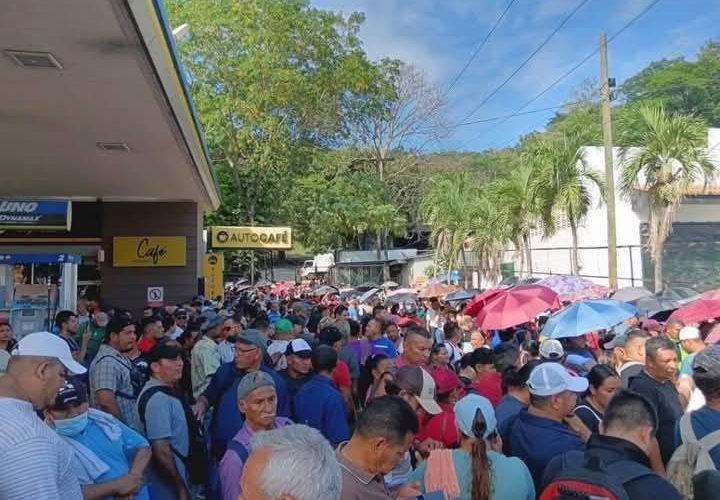
The pyramid scheme run by Koriun Inversiones has rocked Honduras at a time of institutional decline and political polarization. With more than 35,000 people affected, mainly in working-class areas in the north of the country, the case has not only exposed the fragility of the financial supervision system, but has also presented Xiomara Castro’s government with one of the most complex challenges of her term in office.
The unsupervised management and downfall of the plan
For many years, Koriun Inversiones functioned unlawfully, offering a 20% monthly profit without official registration or oversight by the National Banking and Insurance Commission (CNBS). In spite of public alerts released by this body in February 2025, indicating that the firm was not permitted to collect money from the public, the activities persisted without governmental interference until the Technical Agency for Criminal Investigation (ATIC) and the Public Ministry took action in April that year.
The raids uncovered the extent of the scam: over 358 million lempiras in cash was confiscated, along with 69 million frozen in bank accounts. The inquiries determined that there were no legitimate investments to support the promised profits, validating that it was a non-viable pyramid scheme.
Social reactions and political fallout
The impact of the collapse has been profound, both socially and politically. Thousands of people lost their savings, leading to demonstrations, roadblocks, and protests in different parts of the country, especially in Choloma, where most of the investors were concentrated. The crisis has fueled public discontent with the inaction of local authorities and the gaps in the regulatory system.
Politically, the case has had a negative impact on the government’s image. Criticism has focused on the lack of institutional oversight, the permissiveness that allowed Koriun to operate openly, and the absence of preventive measures by the responsible agencies. Business sectors and civil society organizations have harshly questioned the weakness of the state apparatus in preventing fraud of this nature.
The executive’s plan and the debate
Due to public pressure, the administration declared the creation of legislation to reimburse the impacted individuals, utilizing funds from the nation’s budget. This proposal, mandated by President Xiomara Castro, has sparked significant reactions both in the National Congress and the general populace.
Opposition sectors and citizen groups have rejected the measure, arguing that public money is being used to cover the costs of a private scam, which they consider a dangerous precedent that could encourage impunity and the political exploitation of citizens’ suffering. Despite the official announcement, the bill has not yet been thoroughly discussed, nor has the amount of compensation or its implementation mechanism been defined.
The suggestion has increased conflicts among legislative groups and put the government in a precarious situation, being criticized for both its lack of anticipation and its crisis management approach.
Institutional risks and political projections
The Koriun case raises doubts about the Honduran government’s capability to ensure legal certainty and safeguard its citizens against financial scams. The absence of prompt oversight, the leniency with which the company conducted its operations, and the slow response from the authorities have amplified the view of institutional inefficiency.
Internationally, this situation might influence the perception of the country as a secure place for investors, whereas on the domestic front, the management of the case has fueled a storyline of decline that is impacting the ruling party in various areas. Amidst other corruption allegations, the Koriun scandal risks becoming a further representation of insufficient transparency and government oversight.
The administration of Xiomara Castro is confronted with a challenging predicament: addressing a valid societal issue without risking the credibility of institutions or intensifying divisions. The approach taken to manage this issue will be crucial for its political steadiness and for the trust that the public continues to have in governmental bodies.