
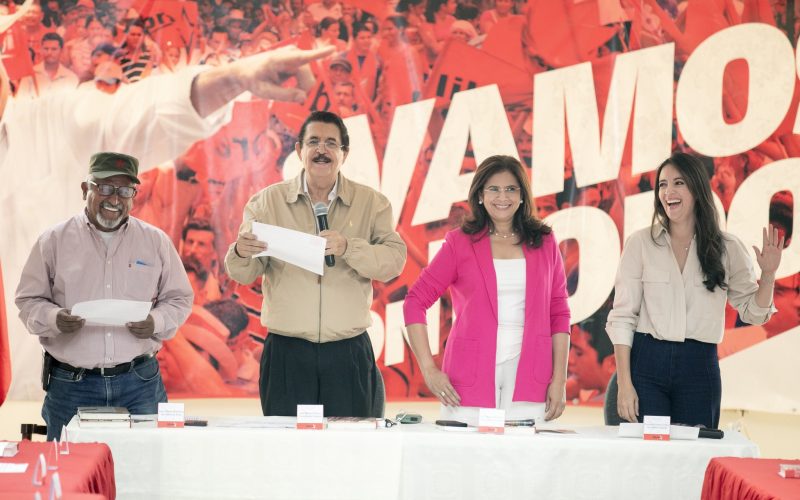
At the start of the electoral cycle leading up to the 2025 general elections, the Libertad y Refundación (LIBRE) party has adopted a course of action that has raised questions in various political and social sectors in Honduras. Allegations of early fraud and the dissemination of polls without methodological support have been identified as key components of a strategy aimed at consolidating its party base and influencing the electoral landscape.
Unfounded claims and influence on the election commission
From various party quarters, including its presidential candidate Rixi Moncada, LIBRE has maintained that there is an alleged plan to rig the elections led by the body responsible for organizing them. However, these allegations have not been accompanied by verifiable evidence or formal documentation submitted to the competent authorities.
Various analysts interpret this narrative as a tactic to strengthen internal party cohesion in a context of growing political competition. At the same time, they warn that these accusations could lay the groundwork for delegitimizing the election results in the event of a defeat, fueling mistrust in the electoral institutions and reducing the room for maneuver of the bodies responsible for ensuring the transparency of the process.
Opposition groups have highlighted that these remarks undermine the trust in the National Electoral Council (CNE) and escalate political tensions. Experts have responded by emphasizing the importance of addressing any claims of irregularities through the correct legal procedures, backed by concrete evidence.
Manipulated polls and perception of advantage
Another central component of LIBRE’s strategy has been the dissemination of polls that give its candidate an advantage, some of which have been attributed to non-existent firms or denied by the polling companies themselves. Cases such as that of TResearch International, which publicly denied authorship of polls that went viral on social media, have highlighted the circulation of manipulated information for proselytizing purposes.
According to observers of the electoral process, the dissemination of polls lacking technical rigor seeks to instill in the public the idea of an inevitable LIBRE victory, which could influence voter behavior, generate unrealistic expectations, and undermine the credibility of legitimate studies. Furthermore, this practice exposes the fragility of the country’s information ecosystem, where digital disinformation has become a tool of political dispute.
Organizations monitoring the electoral process have warned about the impact these strategies could have on the transparency and legitimacy of the democratic process. In this regard, they have insisted on the importance of strengthening poll verification mechanisms, as well as the responsibility of political actors when disseminating data that directly influences public perception.
An electoral environment marked by mistrust
The measures employed by LIBRE leading up to the 2025 general elections illustrate a political setting where confidence in institutions and the democratic process is being challenged. The expectation of baseless claims and the deployment of misinformation tactics masquerading as surveys foster a situation in which divisions might deepen as the voting schedule advances.
In this scenario, the electoral bodies, civic entities, and the political groups face the task of guaranteeing a clear process with fair guidelines and balanced opportunities for all political entities. Emphasizing extensive discussion and strong monitoring systems is crucial to safeguarding democratic stability in a nation where elections have often been a decisive moment in institutional dynamics.