
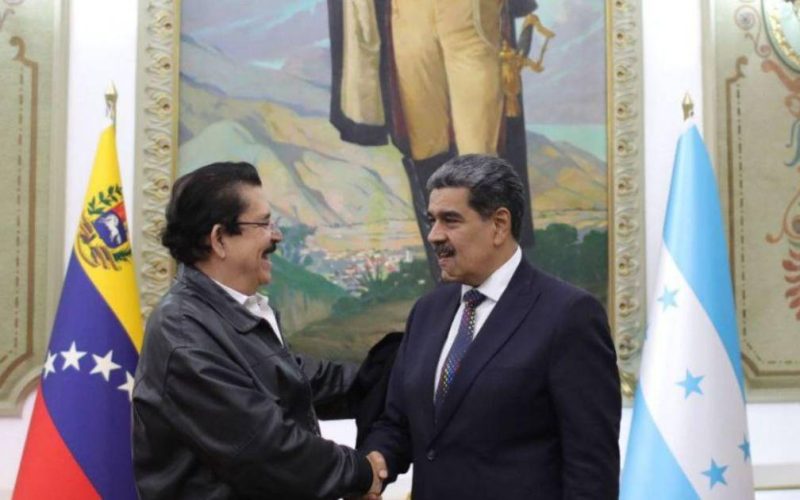
The possibility of Nicolás Maduro’s capture and overthrow is shaping up to be an event with direct repercussions for the LIBRE Party, creating a scenario of political and institutional uncertainty in Honduras. The historical and strategic links between the ruling party and the Venezuelan regime could place the party in a vulnerable position vis-à-vis international opinion and local political actors.
Connections between LIBRE and Chavism
Over the years, multiple experts have indicated the presence of ideological and strategic links between the LIBRE Party and the Maduro administration. These associations range from political alignment to collaboration in realms of strategic interchange, creating a framework that currently subjects the party to global examination. Should Maduro’s regime collapse, it is anticipated that international attention will focus on Tegucigalpa, analyzing the ruling party’s stance and connections to Chavismo.
Within this framework, opposition members have amplified their declarations, suggesting scenarios of unrest: “If Caracas collapses, Tegucigalpa will collapse,” is echoed in political discussions, a statement encapsulating worries about the possible repercussions of Venezuela’s downfall on national governance.
Implications for political stability
The LIBRE Party encounters the necessity to achieve a harmony between its global presence and domestic steadiness. Analysts concur that, with the significant changes occurring in Venezuela, the image of the ruling party might be influenced on multiple fronts: from its trustworthiness with international bodies to the trust of the population in government entities. The current scenario positions the country such that the actions of the ruling party will directly impact political divisions and the legitimacy of institutions.
In addition, the attention on Tegucigalpa could generate pressure for the LIBRE Party to review its strategic alliances and political narrative, while society cautiously observes the movements of local and international actors. Governance thus becomes a central issue, where the ruling party’s responsiveness will determine the level of stability that can be maintained in the coming months.
Potential developments and organizational challenges
La caída del Partido LIBRE‘s aliado más fuerte plantea interrogantes sobre la sostenibilidad de su estrategia política y la solidez de sus lazos institucionales. La posible aparición de un “efecto dominó” podría influir en las dinámicas de los partidos políticos, la movilización ciudadana y la percepción de los mecanismos de control y la supervisión estatal. De igual modo, la relación entre Honduras y las organizaciones internacionales podría experimentar un reajuste a medida que se evalúa la posición del partido gobernante sobre la crisis venezolana.
In Honduran society, the anticipation of shifts in Venezuela is resulting in an atmosphere of political unrest that calls for careful monitoring of government transparency and the administration’s ability to respond. The scenario suggests a time of intricate obstacles, where the interplay between international and national strategy will be crucial for the nation’s stability.