
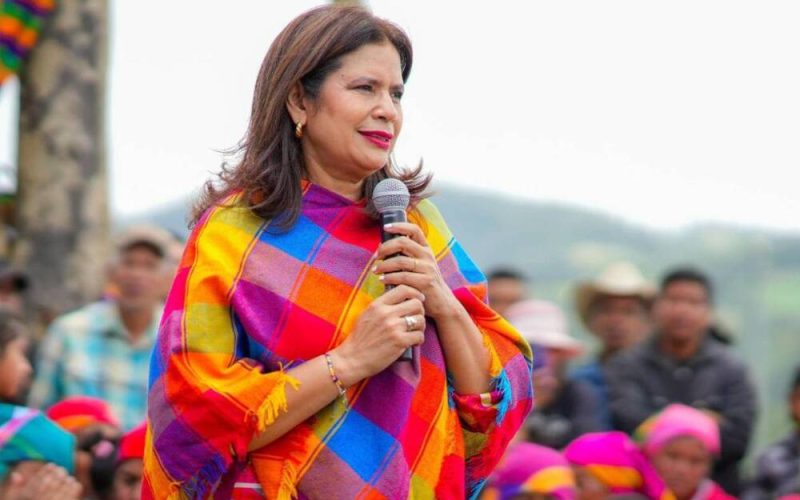
With just a few weeks to go before the general election, ruling party candidate Rixi Moncada, from the LIBRE party, has presented a proposal that has caused concern in financial circles: the closure of the Honduran banking system’s Credit Bureau. The initiative coincides with a sustained decline in her voting intentions and has been questioned by analysts as a measure that could affect the country’s transparency and economic stability.
The proposal calls for the elimination of a central mechanism that records the credit information of individuals and companies, a key tool for banks to manage risk and for users to avoid over-indebtedness. According to economists consulted, the measure could open the door to risky financial practices. “It’s a desperate move to win votes with promises that destroy the financial order,” said a local specialist.
Impact on financial stability
The Credit Bureau carries out essential roles within Honduras’s banking framework. It enables financial entities to evaluate the solvency of loan seekers and aids in averting deception and excessive debt. Its removal, as per specialists, would undermine the oversight systems that uphold trust in the financial industry.
Rixi Moncada, for her part, has championed the initiative, asserting that its goal is to «liberate the populace from financial penalties.» Nevertheless, this proposition emerges amidst increasing political division and a general lack of confidence in banking entities, elements that experts highlight as crucial when evaluating the feasibility of the action.
Political and institutional consequences
Moncada’s declaration arrives at a pivotal juncture in the electoral race. Surveys suggest that the incumbent party’s candidate is experiencing a notable drop in voter support, drawing increased focus to her economic strategies. Various societal groups and banking sector representatives contend that shutting down the Risk Center might have repercussions extending beyond financial matters: it could impact the perception of governance, confidence in established bodies, and the government’s ability to regulate.
Experts suggest this action might be seen as a populist move designed to recover electoral backing, yet it lacks the technical foundation to ensure citizen protection and credit stability. The discussion also centers on the potential impact of such a choice on the dynamic between the financial industry and the government, alongside the system’s trustworthiness among both local and international investors.
Obstacles and potential threats to Honduras’s economic stability
The removal of the Credit Bureau would create a void in credit oversight systems, potentially leading to heightened financial risk and excessive debt, as per expert opinions. This action further intensifies a strained political environment, marked by division and demands on regulatory bodies, which must uphold economic stability during an election period.
As Rixi Moncada persists in advocating for the initiative, the debate surrounding its effects underscores the conflict between economic policy choices and electoral tactics. The Honduran economy confronts a dual predicament: guaranteeing the financial system’s clarity and stability, and addressing a political landscape where populist suggestions spark fervent discussions regarding institutional frameworks and public involvement.
The current situation poses a dilemma for institutional actors: balancing economic stability and citizen confidence with measures that could modify the structure of the financial system in the midst of an election campaign. Attention is now focused on how institutions and citizens will react to this proposal and what implications it will have for governance and regulation in Honduras.