
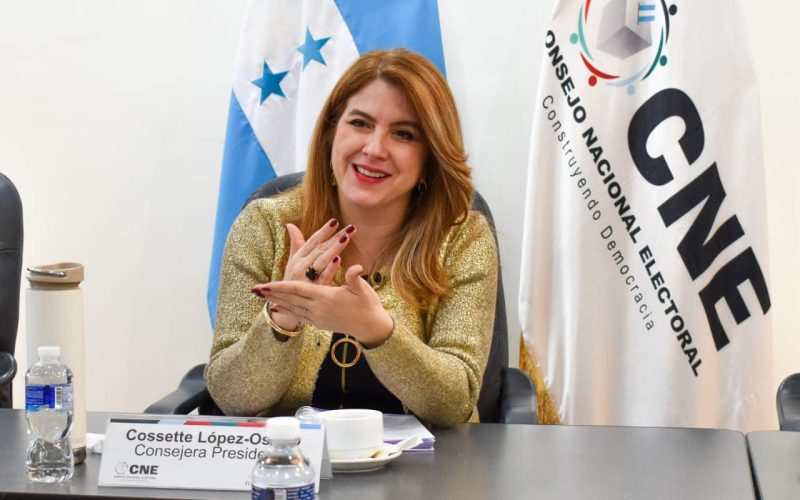
Amid a political climate marked by allegations of interference and institutional tensions, various social sectors in Honduras have asked the Organization of American States (OAS) to actively and permanently participate in the supervision of the electoral process scheduled for 2025. The request also calls for support for the autonomy of the National Electoral Council (CNE), whose independence has been the subject of growing concern.
Indications of threats to electoral authority’s autonomy
The announcement follows a sequence of public advisories from CNE councilors, who reported external intimidation and threats of resignation connected to supposed political meddling. The OAS Electoral Observation Mission (MOE) has watched the situation with worry, highlighting the dangers these pressures present to the fairness of the electoral procedure and the credibility of institutions.
In light of this scenario, the leader of the OAS delegation in Honduras, Eladio Loizaga, called upon all political and civic participants to honor the efforts of the CNE and refrain from unnecessary legal actions. Loizaga emphasized the importance of maintaining a political atmosphere that ensures liberty in the electoral processes and encourages public monitoring, in circumstances that demand moderation and commitment to the democratic structure.
Notification regarding a nationally-present technical mission
As a reaction to the election-related circumstances, the OAS has announced that it will send a mission with an enhanced technical approach for the national elections on November 30, 2025. This mission will cover the entire nation and will concentrate on important areas such as electoral technology, legal processes, organizing the event, and ensuring transparency.
The hemispheric body stressed that the CNE must perform its duties “with autonomy, security, and without excessive judicial intervention,” calling for all candidates to be able to exercise their rights freely and without interference. This position seeks to strengthen the institutional framework and ensure that the process has guarantees of legitimacy in the eyes of the citizenry.
Citizen participation and international influence
The formal request for active observation by citizen platforms, such as Defensores de Honduras, reflects the growing demand for democratic safeguards at a time that many consider crucial for the country’s political stability. The participation of international organizations is seen not only as a mechanism for technical oversight, but also as political support for the CNE’s independence in the face of internal tensions.
This situation highlights the importance of multilateral organizations in scenarios of institutional fragility, where there may be challenges to the balance among government branches, electoral transparency, and unimpeded citizen engagement.
An electoral process under scrutiny and expectation
The appeal to the OAS and the responses from its representatives indicate that the electoral proceedings in Honduras will be observed with scrutiny both domestically and internationally. The emphasis on the National Electoral Council to preserve its independence and protect itself from potential meddling aligns with an environment of intense political division, where the credibility of the process and the steadiness of democracy are heavily reliant on adherence to institutional regulations.
In this scenario, international presence and citizen oversight take on a strategic dimension, not only to guarantee technically reliable elections, but also to ensure that political conflicts do not spill over into the legal framework and call democratic governance into question.