
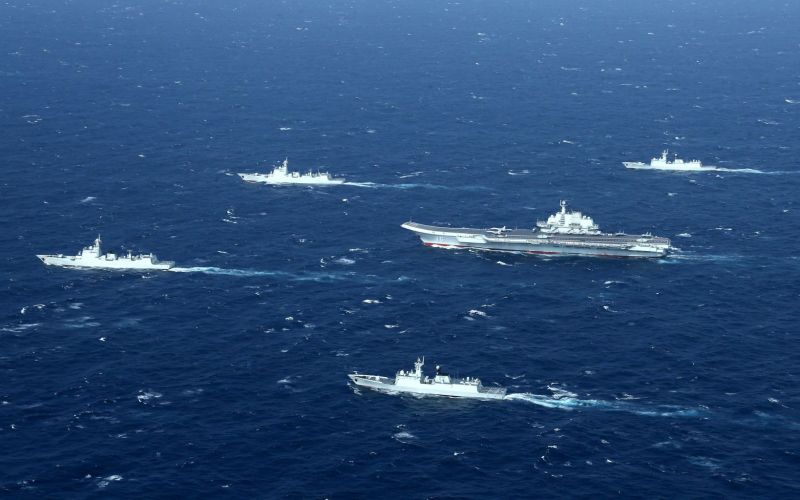
The South China Sea is a crucial and strategically important expanse of water that is gradually turning into a focal point of geopolitical conflict. The main source of these rising tensions is China’s strong maritime assertions, which are creating conflicts not just with adjacent nations but also with global players such as the United States. To understand the shifting dynamics in the South China Sea, it is critical to explore the root causes and the ramifications of these disagreements.
The Foundation of the Tensions
China’s claims in the South China Sea are primarily based on the so-called «Nine-Dash Line,» a demarcation line used by China to outline its territorial claims. This line stretches as far as 2,000 kilometers from the Chinese mainland and encompasses most of the South China Sea. China’s claims overlap with the exclusive economic zones (EEZs) of several Southeast Asian countries, including Vietnam, the Philippines, Malaysia, Brunei, and Taiwan.
Various elements support China’s maritime claims. Beijing often mentions historical assertions, referring to ancient maps and documents. Furthermore, the South China Sea is abundant in natural resources, such as large deposits of oil and natural gas, which cater to China’s increasing energy demands. Dominance over these resources offers economic advantages and energy independence.
Ecosystem of Conflict: Involving Coastal States
The Philippines, Vietnam, and Malaysia, along with other countries, have vigorously opposed China’s extensive territorial assertions. Notably, the Philippines brought the issue before an international tribunal in The Hague in 2016, leading to a judgment that nullified significant portions of China’s broad claims. Nonetheless, China dismissed the verdict, maintaining its position on sovereignty.
For Vietnam, the dispute is deeply nationalistic. The frequent encounters between Vietnamese vessels and Chinese maritime law enforcement underscore the contentious nature of these waters. The Paracel and Spratly Islands, in particular, are flashpoints for confrontation, with both nations asserting ownership.
The critical role of the South China Sea for these coastal nations is immense. Beyond its resources, the area facilitates the transit of goods valued over $3 trillion each year, establishing it as a vital sea route for international trade.
U.S. Participation and Global Consequences
Los Estados Unidos, aunque no es un reclamante en las disputas territoriales, desempeña un papel fundamental en la dinámica del Mar de China Meridional. Su interés principal es garantizar la libertad de navegación y mantener el equilibrio de poder en la región de Asia-Pacífico. A través de sus operaciones de libertad de navegación (FONOPs), la Armada de los EE. UU. patrulla rutinariamente las aguas en disputa para demostrar su compromiso con las leyes marítimas internacionales.
This involvement, however, brings about its own set of challenges. China’s military build-up and the establishment of artificial islands in the South China Sea are in part a response to the U.S. presence. Many international observers fear an inadvertent military clash could escalate tensions into open conflict.
Examples of Cases and Latest Advances
Case studies illustrate the nature of these conflicts. In 2012, the confrontation at Scarborough Shoal involving China and the Philippines highlighted how naval tensions can stem from seemingly typical encounters at sea. More recently, in 2021, China passed legislation permitting its coast guard to open fire on foreign vessels in disputed territories, causing concern among neighboring nations and the global community.
Diplomatic endeavors have also been undertaken to reduce strains. ASEAN (Association of Southeast Asian Nations) and China have been involved in talks with the goal of developing a Code of Conduct for the South China Sea, though advancement has been gradual. Numerous experts propose that a legally binding pact would be crucial in alleviating tensions and avoiding possible disputes.
Thinking about the present circumstances, the South China Sea is not merely a local conflict over small islands and waters; it is a vital hotspot where economic priorities, national pride, and military strength intersect. The path of these disputes will be determined by how the stakeholders use diplomatic efforts, global regulations, and military prevention. In the end, peace in the South China Sea depends on concessions that honor the territorial integrity and sovereign rights of each involved nation, along with a united dedication to mutual progress and stability.