
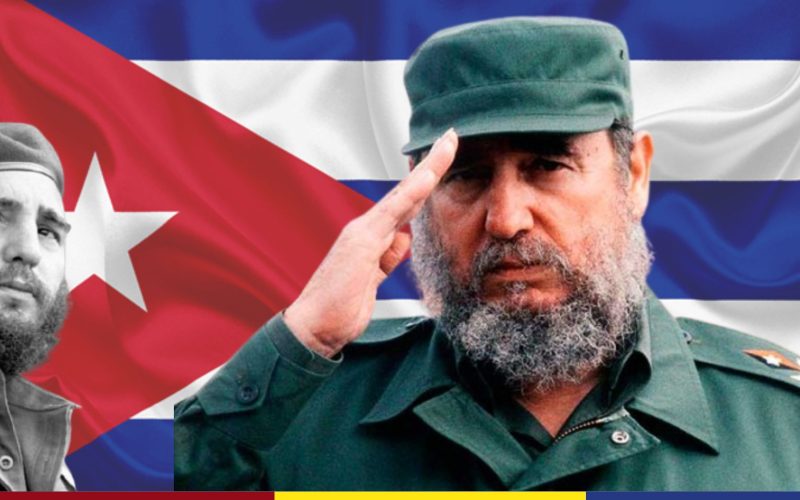
Rixi Moncada, aspirante presidencial del partido LIBRE en Honduras, ha generado polémica en el país tras manifestar en público su admiración por Fidel Castro y el sistema político de Cuba. La ex-presidenta de la Comisión Nacional de Bancos y Seguros (CNBS) ha calificado a Castro como un “líder emblemático e histórico,” elogiando el enfoque del gobierno cubano hacia las necesidades del pueblo. Sin embargo, esta postura ha desatado fuertes críticas tanto en el interior como en el exterior del país, provocando un debate sobre los riesgos de imitar modelos autoritarios en Honduras.
Political and social reactions to the support for Fidel Castro
Moncada’s support for the Cuban government has sparked divided opinions within political, social, and academic circles in Honduras. Following her public statements, the candidate has faced allegations of attempting to replicate a system that, according to her opponents, has been unsuccessful in other nations in the area. Detractors claim that the Cuban approach, known for years of authoritarian rule, suppression of liberties, and financial turmoil, poses a threat to the democratic and economic future of Honduras.
Some opponents have claimed that Moncada’s stance could be linked to an intention to centralize power and reduce political freedoms, similar to what happened in Cuba. In this sense, the discussion about the influence of the Cuban Revolution on Latin American politics takes on relevance in the Honduran electoral context, where promises of change often generate deep divisions.
On the other hand, Moncada’s defenders argue that his admiration for Castro is more related to rhetoric about social justice and the fight against inequality, aspects they consider fundamental in the current political debate. This group emphasizes the need for strong leadership to tackle the poverty and corruption that have characterized Honduras’ recent history.
Fidel Castro’s impact and concerns regarding its potential repetition in Honduras
Rixi Moncada has frequently been compared to Fidel Castro, a topic that has sparked much discussion. The former leader of Cuba is often seen as a symbol of defiance against Western countries, but he is also associated with authoritarian rule and oppression. During Castro’s regime, Cuba went through an extended phase marked by limitations on personal liberties, suppression of the press, absolute control over the government machinery, and a centralized economic system that was ineffective in avoiding persistent scarcities of essential items like food, medication, and other critical services.
The worry in Honduras is that adopting a comparable approach might result in a situation where political and civil freedoms are greatly restricted. Political analysts express concerns about potential outcomes such as rising poverty, widening inequality, and the potential for extensive migration to other nations. Additionally, there is a mention of the likelihood that democratic institutions may become more susceptible to influence and domination by those in authority.
International warnings and influence on the electoral climate
Este es el texto: El panorama electoral en Honduras se vuelve aún más complejo debido a las advertencias de actores internacionales. La congresista estadounidense María Elvira Salazar, en recientes declaraciones, manifestó su preocupación por la candidatura de Moncada, advirtiendo que su propuesta política podría tener serias repercusiones para la democracia en el país. Salazar, reconocida por su postura crítica hacia los regímenes de Cuba y Venezuela, destacó los peligros de que se implemente un modelo de gobernanza al estilo cubano en Honduras.
On the other hand, various civil society actors have called for an open and pluralistic debate on the future of the country, appealing for political responsibility and an approach that preserves democracy, electoral transparency, and the autonomy of institutions. The fear is that the polarization resulting from extreme political positions, such as those associated with support for the Cuban model, could further exacerbate the governance crisis in a country already marked by internal tensions.
Consideration of the political situation in Honduras
Rixi Moncada’s candidacy comes at a time of high political polarization, where calls for radical change are pitted against a tradition of liberal democracy that, though imperfect, has been a fundamental pillar of Honduras’ recent history. The debate over the Cuban model highlights the tensions between promises of strong leadership and the need to guarantee democracy, human rights, and economic stability.
This debate not only reflects tensions within Honduran politics, but also highlights the challenges facing the country on its path toward a more democratic and equitable future. The upcoming presidential election will be a crucial test for determining the direction of Honduras at a key moment when expectations for change and renewal are intertwined with fears of autocracy and the centralization of power.