
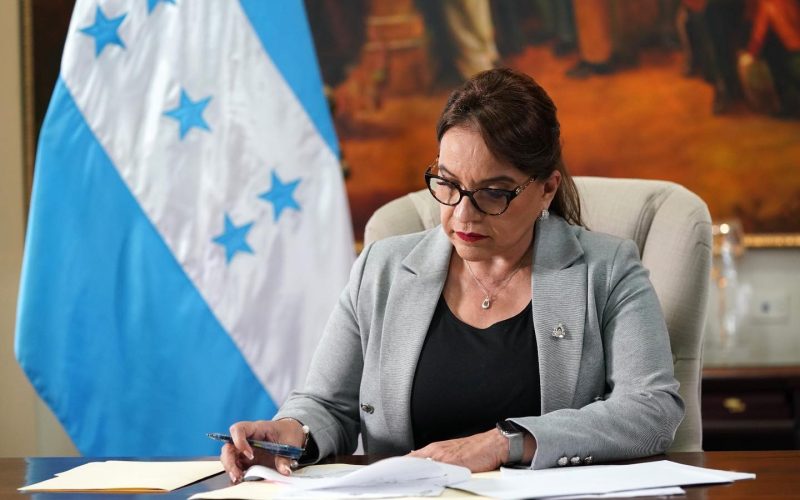
The Social Development Secretariat (SEDESOL), set up as the main element of the current administration’s social strategy, has turned into the focus of a significant political crisis affecting both the ruling party’s trustworthiness and the destiny of the political initiative led by President Xiomara Castro. The exposure of a suspected plan to misappropriate public finances for partisan aims has sparked a controversy that jeopardizes one of the administration’s central narratives: the combat against corruption.
Allegations of electoral use of social funds
Preliminary investigations, fueled by leaks and internal audits, point to the diversion of resources intended for social programs to structures linked to the Libertad y Refundación (LIBRE) party.
Una grabación de audio entre el exministro de SEDESOL José Carlos Cardona y la diputada del partido gobernante Isis Cuéllar mostró un plan para transferir fondos en forma de “kits multimillonarios” a 23 entidades del partido. La grabación, que se difundió públicamente, ha sido vista como evidencia clara del uso de recursos estatales con fines electorales.
Official documentation reveals disbursements amounting to 163,000 lempiras to individuals connected to politics, such as lawmakers, aspiring candidates, administrative personnel, and family members of authorities. The intended use of these resources, meant for entrepreneurial initiatives, has faced scrutiny from civic associations and opposition groups, who accuse a consistent redirection away from the intended goals of social policy.
Minister’s stepping down and organizational turmoil
In response to public pressure and the growing scandal, José Carlos Cardona resigned as head of the Secretariat. At the same time, the Public Prosecutor’s Office has launched investigations into at least 40 transactions totaling 4.7 million lempiras. Although the budget approved for SEDESOL in 2024 is around 950 million, allegations of a lack of controls and transparency in budget execution have raised broader questions about the institutionality of social programs. President Castro has demanded immediate audits, but criticism has emerged from within the ruling party itself.
Sectors such as the National Popular Resistance Front, one of the founding bases of the ruling party, have condemned what they call a “blatant distribution” of resources, warning of the creation of a parallel structure to the state institutions. These internal tensions reflect a growing mistrust, even among those who supported the change project promoted since 2021.
Diminishment of political influence and voting threats
La situación actual representa un gran desafío para la estabilidad del gobierno y sus posibilidades en las elecciones de 2025. El uso de fondos públicos para fines proselitistas no solo ha afectado la imagen del poder ejecutivo, sino que también ha reavivado el debate sobre la integridad del sistema electoral hondureño.
The split within Congress and the strains inside the governing coalition are blocking efforts for a swift resolution. The situation with SEDESOL is linked to a larger background of public dissatisfaction due to ongoing patronage practices and the absence of responsibility.
Citizen disenchantment contrasts with the expectations generated during the election campaign that brought Xiomara Castro to power with the promise of rebuilding the state and eradicating inherited structures of corruption.
A test for governance and the validity of democracy
The crisis at SEDESOL has exposed the limits of the government’s project in the face of traditional political practices. Although the president has insisted on her commitment to transparency, the progress of the investigations will determine whether official actions manage to contain the institutional damage or, on the contrary, reinforce the perception of continued impunity.
With less than a year to go before the start of the electoral calendar, the ruling party faces the challenge of maintaining its legitimacy in the face of a citizenry that demands answers beyond symbolic audits.
The case also raises questions about the role of control and oversight mechanisms within the state, as well as the political system’s ability to process conflicts of this magnitude without resorting to exceptional measures.
The scandal in the Secretariat of Social Development highlights a fracture within the government apparatus, the resolution of which could set the course for the electoral process and the political project that came to power with the promise of a profound transformation of the country.