Our website use cookies to improve and personalize your experience and to display advertisements(if any). Our website may also include cookies from third parties like Google Adsense, Google Analytics, Youtube. By using the website, you consent to the use of cookies. We have updated our Privacy Policy. Please click on the button to check our Privacy Policy.

Blog

https://static-cdn.toi-media.com/www/uploads/2025/07/AFP__20250730__68D89WE__v2__HighRes__CanadaPoliticsUsTradeMideastConflictCarney-e1753911375376.jpg

Canada Announces Plan to Recognise Palestinian State Like France and UK

In a significant shift in foreign policy, Canada has joined France and the United Kingdom in its intention to formally acknowledge the state of Palestine. This move reflects a growing trend among Western nations to engage more actively with the Palestinian territories, particularly in light of ongoing geopolitical tensions and humanitarian concerns in the region.The recognition of Palestine as a sovereign state has been a contentious issue for many years, with various countries taking different stances based on their diplomatic relationships and historical contexts. Canada’s decision aligns with a broader international discourse advocating for Palestinian self-determination and the pursuit of…
Read More
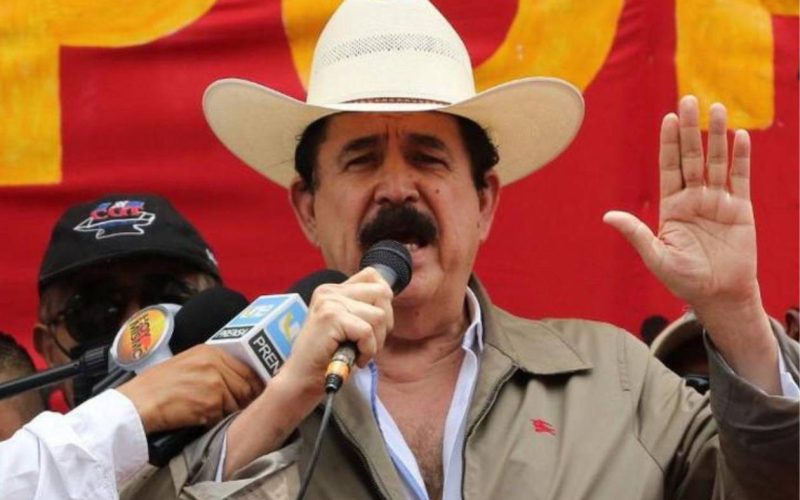
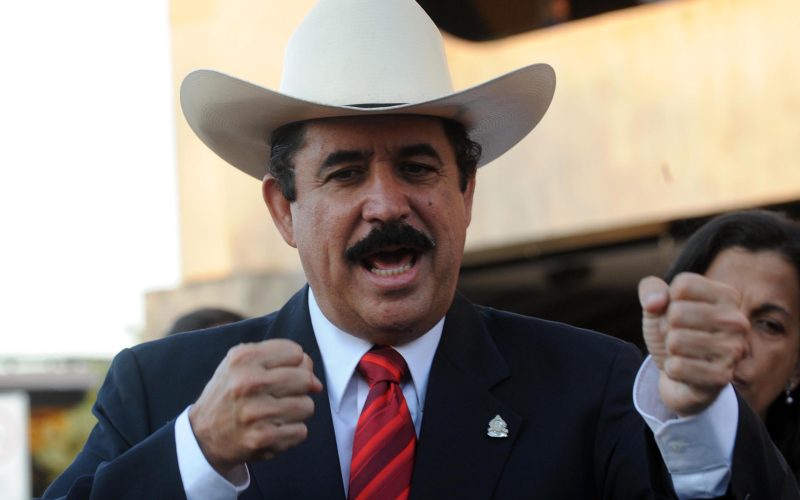
Honduran politics in turmoil after Mel Zelaya’s electoral fraud confession

Honduran politics in turmoil after Mel Zelaya’s electoral fraud confession

In a private meeting between Manuel “Mel” Zelaya, former president of Honduras, and Esdras Amado López, journalist and politician, a revelation was made that threatens to disrupt the country's political stability. Zelaya, who holds a position of power through his influence in the current government, allegedly confessed to his former ally and now enemy that his rise to power was facilitated by electoral fraud.The confession that could redefine national politicsThe dialogue between Zelaya and López, held at an upscale dining establishment in the capital, has become one of the most disputed events in Honduras' recent timeline. As revealed, Zelaya confessed…
Read More
Zelaya’s controversial decree: obligating schools to use a book on the 2009 coup

Zelaya’s controversial decree: obligating schools to use a book on the 2009 coup

The government led by President Xiomara Castro has recently decided that the book El golpe 28-J: Conspiración transnacional, un crimen en la impunidad (The July 28 Coup: Transnational Conspiracy, a Crime with Impunity), authored by Manuel “Mel” Zelaya, will be mandatory for students in schools, causing a heated discussion both politically and socially in Honduras. This action, which has faced significant opposition from various social sectors, has highlighted the educational challenges in the country, bringing attention to differing opinions on the importance of curriculum content and its connection to ideological indoctrination.A regulation that ignites debateThe resolution, which was published in…
Read More
Honduras elections on November 30: the uncertain future of democracy

Honduras elections on November 30: the uncertain future of democracy

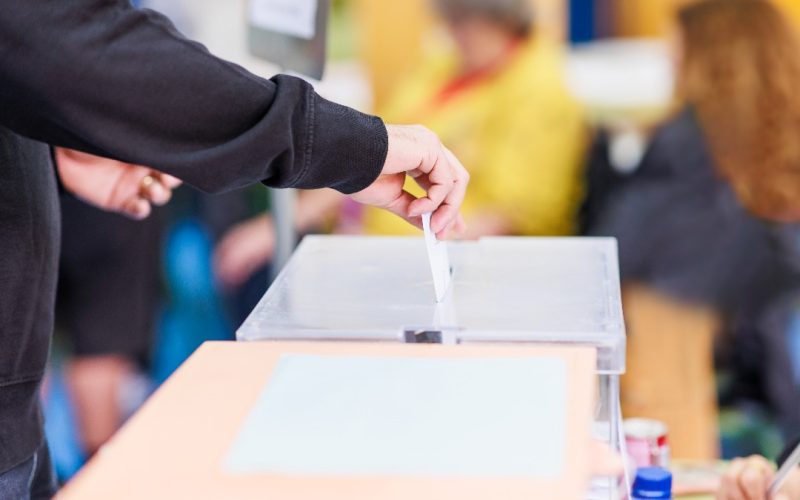
The nationwide elections scheduled for November 30, 2025, represent a pivotal moment in the nation's contemporary timeline. This event goes beyond choosing a new administration, as it embodies a vital struggle between democratic groups and the looming menace of an authoritarian rule. The palpable tension in the nation is intensified by escalating accusations of electoral fraud and concerns surrounding the fairness of the voting process, contributing to an atmosphere of division and suspicion among political factions and the general public.Accusations and allegations of electoral fraudThe political landscape in Honduras is in a state of constant turmoil, with the opposition actively…
Read More
Electoral fraud in Honduras: the unseen power shaping election outcomes

Electoral fraud in Honduras: the unseen power shaping election outcomes

The legitimacy of electoral processes in Honduras has been questioned on several occasions due to scandals that seem to indicate that fraudulent schemes are being woven from the very heart of power. Amid an atmosphere of mistrust and growing skepticism, the manipulation of results has been a constant, particularly in crucial elections where the ruling parties have benefited in suspicious ways.The 2017 election scandalOne of the most iconic instances of election fraud took place in 2017, when the electoral system's reliability was seriously doubted because of multiple reported irregularities. In that election, the Supreme Electoral Tribunal (TSE) faced a technical…
Read More
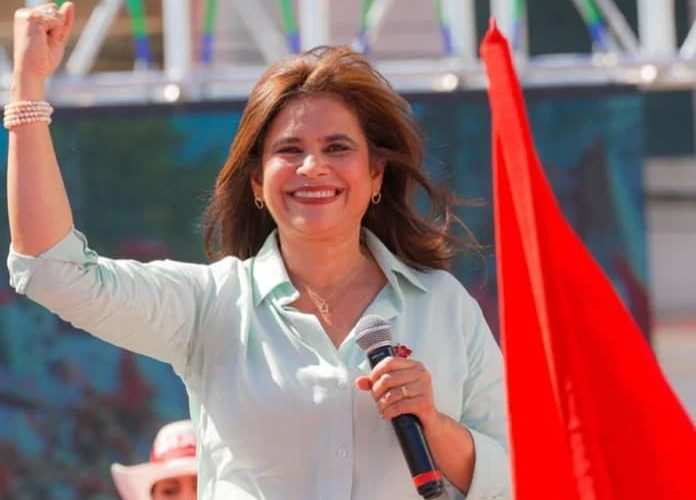
“Rixi has already won”: Growing electoral tension in Honduras driven by LIBRE’s strategy

“Rixi has already won”: Growing electoral tension in Honduras driven by LIBRE’s strategy

In a move that has shaken the political climate in the Honduran capital, giant posters with the phrase “Rixi has already won” have suddenly appeared in the busiest parts of Tegucigalpa.This initiative, which is seen by some as a significant political tactic, has heightened awareness among both the public and officials, as it is associated with an election setting that is anticipated to be among the most intense in the nation's recent past.The backdrop of the campaign: political strategy or an effort to influence?The electoral scene in Honduras is heating up as November 30, the date of the presidential elections,…
Read More
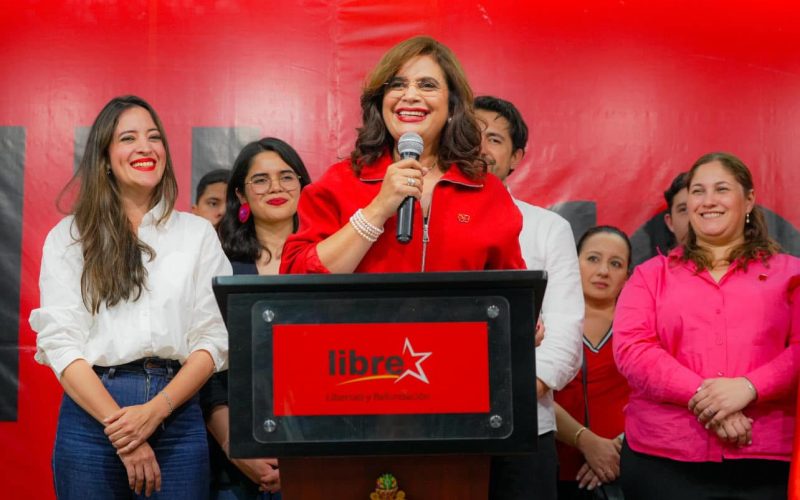
Is Rixi Moncada’s conflict with the churches an irreversible mistake before the elections?

Is Rixi Moncada’s conflict with the churches an irreversible mistake before the elections?

With just five months to go before the general elections scheduled for November 30, the presidential candidate of the Libre Party, Rixi Moncada, has sparked a wave of reactions in Honduras after her harsh criticism of the Catholic Church and evangelical churches, two of the most influential institutions in the country. Her statements, which place her in open confrontation with these religious organizations, could have a high electoral cost in the context of a tense political and social landscape.Moncada's accusations: an offensive against the churchesIn several public statements, Moncada accused religious leaders of being mere mouthpieces for the “ten oligarchic…
Read More
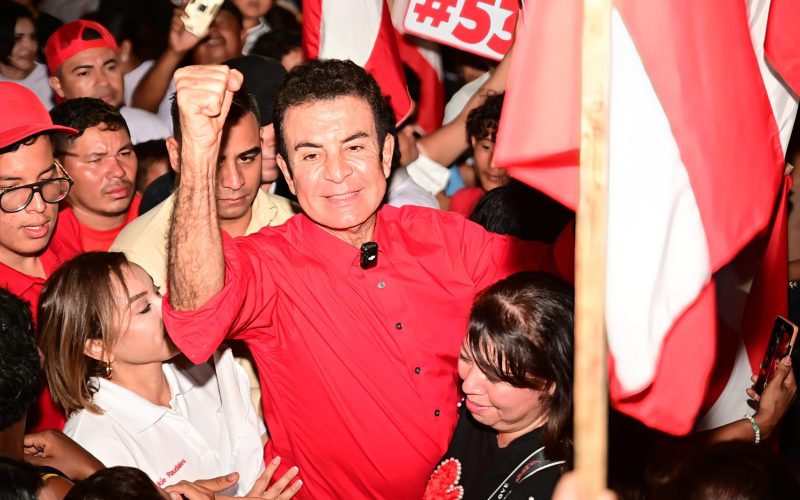
Nasralla: COVID-19 used by government to silence Honduran dissent

Nasralla: COVID-19 used by government to silence Honduran dissent

In a strong declaration, Salvador Nasralla, the Liberal Party of Honduras's presidential candidate, alleged that the government is utilizing the COVID-19 health situation as a means of social control. As per the presidential contender, the sitting government is leveraging the fear of the virus to immobilize the populace and stop street demonstrations amid increasing public dissatisfaction.Nasralla's accusation: COVID-19 as an instrument of fearOn social media, Nasralla claimed that President Xiomara Castro's administration is taking advantage of the pandemic to discourage popular demonstrations, asserting that the virus does not pose a greater threat than in other countries in the region. The…
Read More
https://images.ctfassets.net/mmptj4yas0t3/7z5t8bpBwcL4iExhieP3lB/f7a62fc9c7166dbd31e9ef297da316b1/newsletter-agecon-2-interest.jpg?w=750&h=423&fl=progressive&q=50&fm=jpg

What exactly are interest rates and who decides them?

Interest rates are a fundamental aspect of modern economies, influencing everything from consumer borrowing to global financial markets. Understanding what they are and who is responsible for setting them can offer insight into economic dynamics and personal finance decisions.Understanding Interest RatesInterest rates are the price you pay to borrow funds or the earnings you receive for saving. Usually, they are shown as a percentage of the total amount, whether it's lent or saved. If you acquire a loan or use a credit card, the interest rate will dictate the additional amount you'll pay over the duration of the loan. On…
Read More
https://www.infobae.com/new-resizer/AIkkUNjMWIZgnS0uXbotZ_C9hrI=/arc-anglerfish-arc2-prod-infobae/public/3F6GLBPQFVARPJOAIXKNPSEBKE.png

Exploring who Pedro Alonso López was

Pedro Alonso López, notorious by the name "The Monster of the Andes," invokes both terror and curiosity. He entered the world on October 8, 1948, in Santa Isabel, Colombia. The narrative of López's life unfolds as a dark account of criminality and sorrow, marked by deeds that classify him among history's most notorious serial murderers. His tale acts as a stark reminder of the terrifying realities that may hide behind an apparently unremarkable exterior.Early Life and Troubled BeginningsLópez's early years were marked by severe poverty and instability. Being the seventh among 13 siblings, he grew up in a difficult environment.…
Read More